
Where Art and Therapy Converge
One of my most upsetting moments as a young adult artist was a negative critique I received from my faculty advisor in the Art Department at Pomona College. The critique wasn’t brutal or unfair, it was a simple observation that my choice of media and rendering styles lacked cohesion and didn’t fit the intended tone of the piece. What made it acutely painful was that the drawing in question depicted an unresolved traumatic moment in my personal history, priming me for an intense emotional reaction.
Twenty years later in my personal and professional development, I can see this experience for what it was: an earnest (if clumsy) attempt to use art to heal myself.
The challenge in my early development as an artist was that my most successful pieces were visually interesting while lacking personal meaning. I had the desire to make more deeply personal work, but I was ill-prepared to put these parts of myself on display. I ended up deprioritizing art-making in my mid-twenties and early thirties in favor of focusing on my education and career. I learned the crafts of psychotherapy and art therapy, and honed my skills practicing them in a clinical setting in the years after I completed my Master’s.
I returned to my artist self hesitantly at first. In 2020, amid the pandemic as well as a personal struggle with infertility, I started making geometric wood wall sculptures. My education and the life wisdom accrued over the years cautioned me to take baby steps, to build back slowly. I focused on the meditative quality of the process, sanding and shaping for hours in my garage. The pieces were decorative, but the process carried meaning. It was a grounding exercise that served to anchor me in an uncertain time.
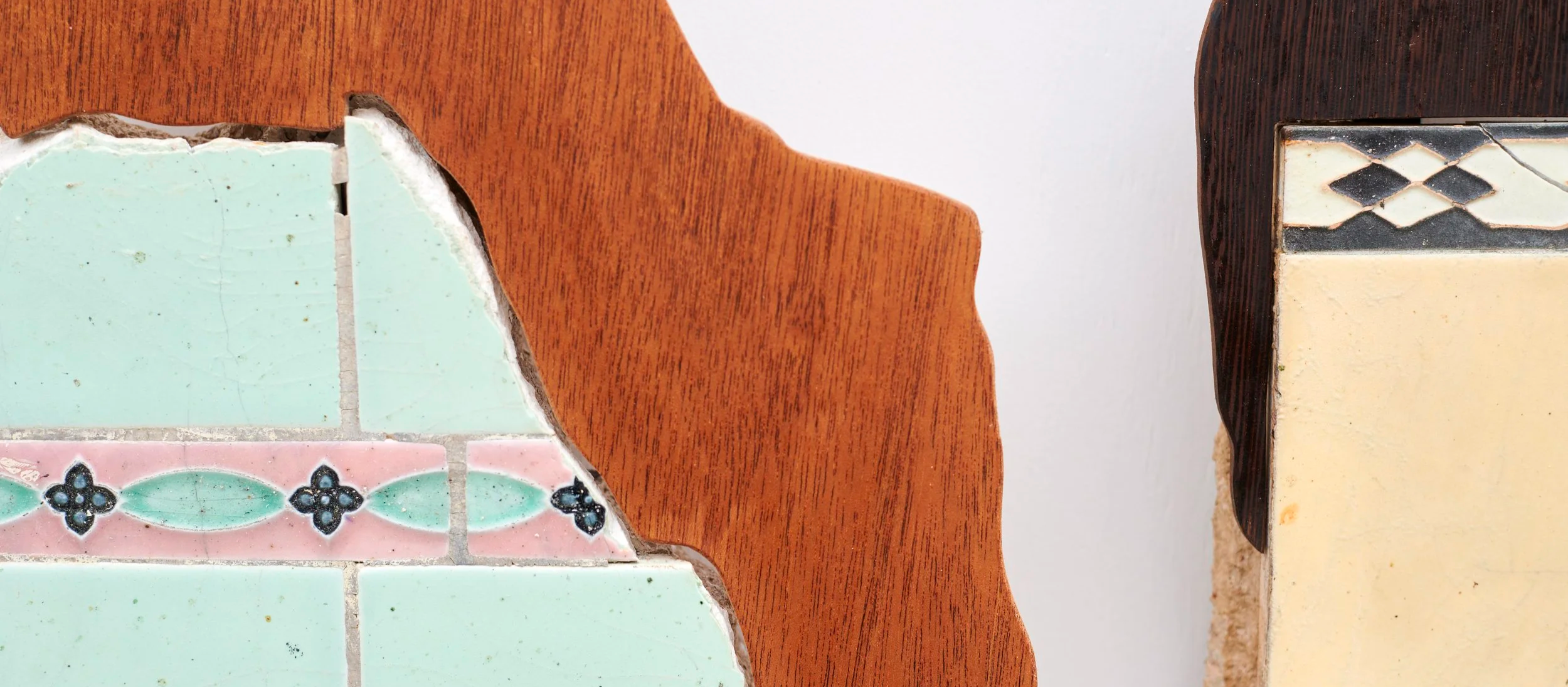
The moment finally came when the urge to make and the urge to heal myself clicked into place and worked cohesively, and it came through the vehicle of tragedy. It was the moment I learned that my childhood home, the home I returned to throughout my adult life to be with family, had burned to the ground in the 2025 Eaton Fire. I knew instantly that, as soon as it was safe to do so, I would find remnants of our family’s history in the rubble and I would transform them into art.
I share the works I’ve made from these remnants, the collection I’ve titled Reconstructing Home: Eaton Fire Reflections, without the insecurity that hampered my younger self. I feel centered and purposeful in the work, and my clinical training as an art therapist has helped me to respect the integrity of the art process as something healing in and of itself.
I’ve realized that I appreciate art of all kinds: smart, technically proficient, unorthodox, expressive, but that above all I value art that dares to be deeply personal. I suppose it’s the therapist in me, but I never tire of a sincere and thoughtful personal story.
With that said, I find the title of the recent LA Times Daily Pilot article about the 42nd Irvine Annual to be apt: “42nd ‘Irvine Annual’ gets personal at Irvine Fine Arts.” The exhibition, where my piece Archipelago is on view through September 5th, features many works with strong personal narratives. The gallery also displays segments of the artist’s statement for each selected artwork, which brings the stories behind the work forward. If you’re also a fan of art with a good story, stop by for a visit.